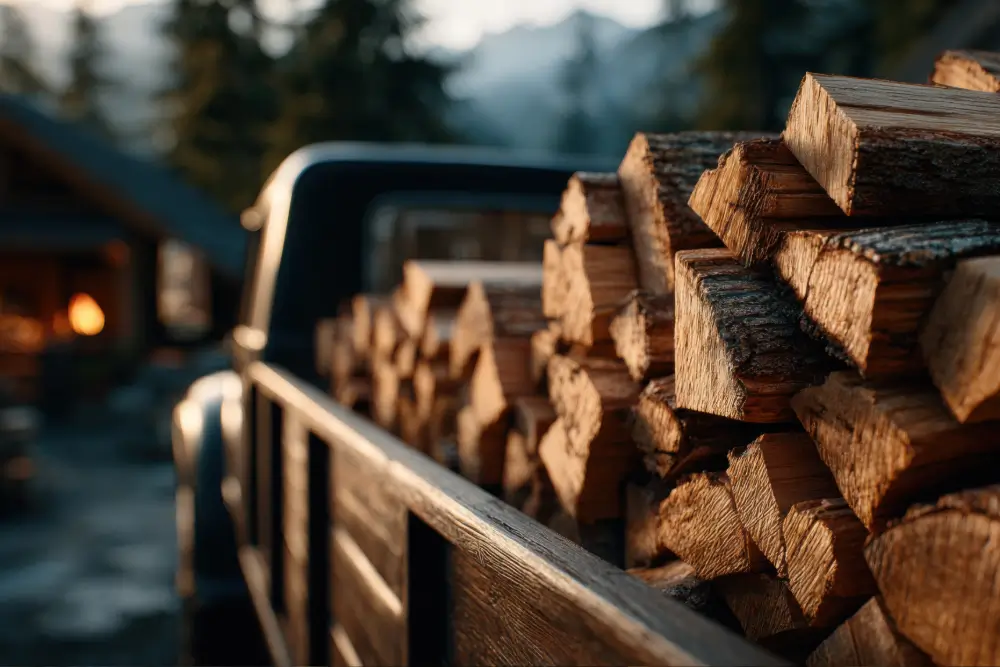
Firewood might be the least forgiving product a local business can deliver. It’s heavy, bulky and messy, demand swings with the thermometer, and customers often live at the end of long rural lanes. Few customers want to collect it themselves, so delivery is where firewood sellers win or lose. This guide looks at who is burning wood in 2026 across the UK, Ireland and Canada, how the heating season shapes your calendar, the dryness and movement rules that affect what you can sell, and how to plan routes for loads that fill a truck before they fill a map.
Who’s Burning Wood in 2026

Wood heat is a smaller share of home heating than it was a decade ago, but plenty of households still burn it, and most of them buy it in.
In Canada, Statistics Canada found that about one in six households (16%) burned wood or wood pellets at their primary or secondary home in 2023. Only 2% relied on wood as their main heat source, down from 4% a decade earlier, but that rose to 6% outside large urban centres, and Canadian households burned almost 2.2 million cords of firewood at their main homes that year, far more than pellets.
In Ireland, the Central Statistics Office’s 2024 energy survey found that half of all people have a stove or an open fire as an additional source of heat: 32% use a stove and 21% an open fire, and 69% of open-fire users burn wood logs.
In the UK, the most detailed national picture comes from Defra’s survey of burning in homes, carried out in 2018–19. It found that 8% of UK adults had burned solid fuel indoors in the previous year, and 59% of recent wood burners had bought most or all of their wood, usually from a specialist or general supplier.
The pattern is the same in all three markets: burning is concentrated outside big cities, it is more often a supplementary heat source than a primary one, and the fuel is usually bought. That means a spread-out customer base that expects the wood to come to them.
“By far the best route planning/local delivery app solution on Shopify. The team behind the app are fantastic and we can see they are working hard behind the scenes to allow many new updates to come in a very short time.”

The Heating Season: Cold Snaps, Early Orders and the Summer Lull

Firewood demand follows the weather more closely than almost any other product. Defra’s survey found that 61% of indoor burners lit a fire in winter, 33% in autumn, 19% in spring and just 7% in summer. In practice, the year breaks into three phases:
- Pre-season (late summer to early autumn). Organized customers stock up before demand peaks, while the wood can still be stacked dry before the rain. This is the best time to fill the calendar with large orders and repeat customers.
- The first cold snap. Demand arrives all at once. The first frosty weekend brings a wave of orders from people who have just realized their store is empty, and they want delivery this week.
- Top-ups through winter. Once the season is underway, orders become smaller and more frequent, and snow, ice and short daylight hours start to limit how many drops a driver can make in a day.
The summer lull is the mirror image, and many sellers use it to process and dry next season’s stock or run a smaller schedule on fixed days.
To keep the peak manageable, open pre-season ordering early and reward it, so part of the winter volume is booked before the weather turns. Then plan for surge capacity instead of staffing for the peak year-round. Our peak-season delivery playbook covers the general approach.
“EasyRoutes has been by far the best. It was easy to set up and connect to our Shopify store, easy for our drivers to use and has really improved the service we give to our customers who love that they get an ETA and can track the driver live.”

Dry Wood, Clean Rules: Moisture, Certification and Moving Firewood
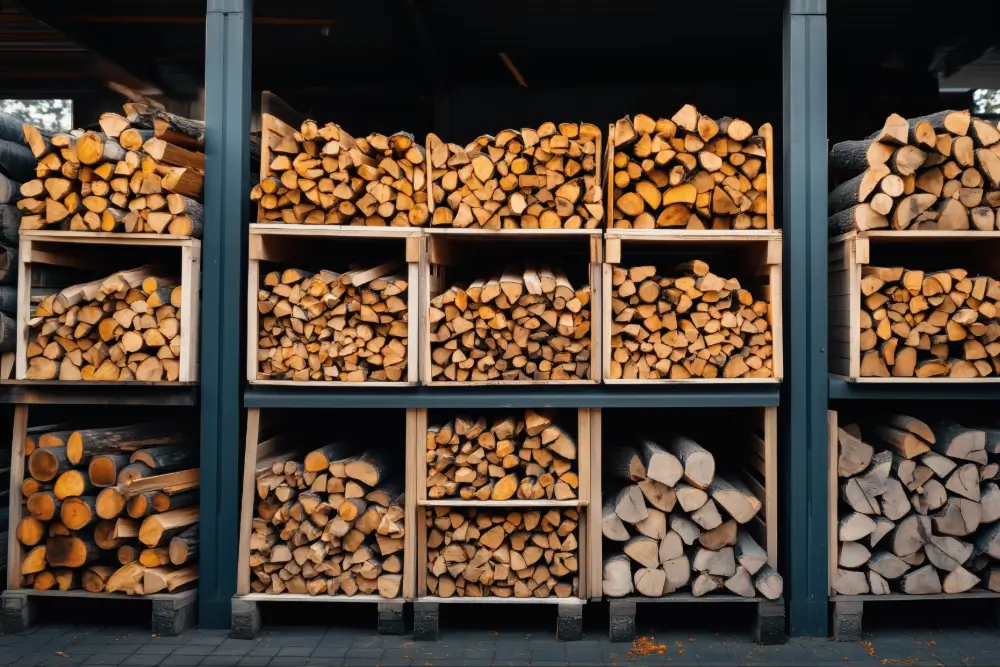
Dryness is both a selling point and, in some markets, a legal requirement.
England and Ireland: Selling Dry Wood by Law
In England, the Ready to Burn rules came into force from May 2021 for most suppliers and May 2022 for smaller ones. Wood sold in volumes of up to 2 cubic metres must be certified as having a moisture content of 20% or less, and suppliers of larger quantities must give customers clear instructions on storing and seasoning it.
Ireland has similar rules. Under the Solid Fuel Regulations that took effect in October 2022, wood sold in quantities of 2 cubic metres or less must have a moisture content under 25%, falling to 20% as of September 2025, and larger quantities must come with drying instructions.
Defra’s survey found that 20% of wood burners were burning wet wood, seasoned for less than a year or not at all. The Forestry Commission is blunt about the standard: firewood must have a moisture content below 20% to burn cleanly and legally. That makes kiln-dried, certified stock a premium you can charge for, and dry storage and covered vehicles a primary product feature.
North America: Moving Firewood Carries Pests
In Canada and the U.S., the concern is less about moisture and more about what hitches a ride in the wood. The Canadian Food Inspection Agency warns that moving firewood from places where regulated pests have been found is a violation of the Plant Protection Act, with penalties of up to CDN$50,000. It advises buying wood cut less than 80 kilometres from where it is sold, and heat-treated firewood can move outside regulated areas with a CFIA certificate. In the U.S., state firewood rules commonly reference USDA’s heat-treatment schedules, such as 60°C for 60 minutes.
For a local seller, these rules are an advantage: they favour wood that is cut, sold and burned in the same area.
Cords, Nets and Bulk Bags: What Your Customer Is Actually Buying

Few products are sold in as many confusing units as firewood, and the unit you sell in decides how many orders fit on a vehicle.
| Unit | Where it’s common | What it means | Delivery notes |
|---|---|---|---|
| Cord | Canada, U.S. | A stacked pile of 128 cubic feet, such as 4 × 4 × 8 feet (about 3.6 cubic metres) | Usually a full truck or trailer load; often dumped or stacked on site |
| Face cord | Canada, U.S. | One row of a cord, with depth set by log length; not a legal unit everywhere | Clarify the log length and volume in writing |
| Bulk (“tonne”) bag | UK, Ireland | A large woven bag of loose logs; the volume varies by seller | Lifted by tail lift or crane, or tipped; needs a firm, reachable drop spot |
| Net or small bag | UK, Ireland | A retail pack of logs, kindling or briquettes | Light enough to hand-carry; in England, packs under 2 m³ need Ready to Burn marking |
| Pallet | UK, Ireland | Stacked bags, nets or briquettes on a pallet | Needs a pallet truck or trolley to move from the curb |
Measurement rules vary. California, for example, says a cord must equal 128 cubic feet, and sellers may not use terms like “face cord,” “rack” or “truckload” because they have no legal definition. Wherever you sell, state the volume, log length and moisture level on every product page, and set up your products so each unit carries an accurate item count or weight. That’s what lets you plan vehicle loads from your orders rather than from memory.
“We run a business selling big bulky tonne bags of logs and topsoil and EasyRoutes has been game changing for us. We were looking to improve on a system of stacked packing slips being handed over physically to our driver.”

Heavy Loads, Narrow Lanes and the Final Few Metres
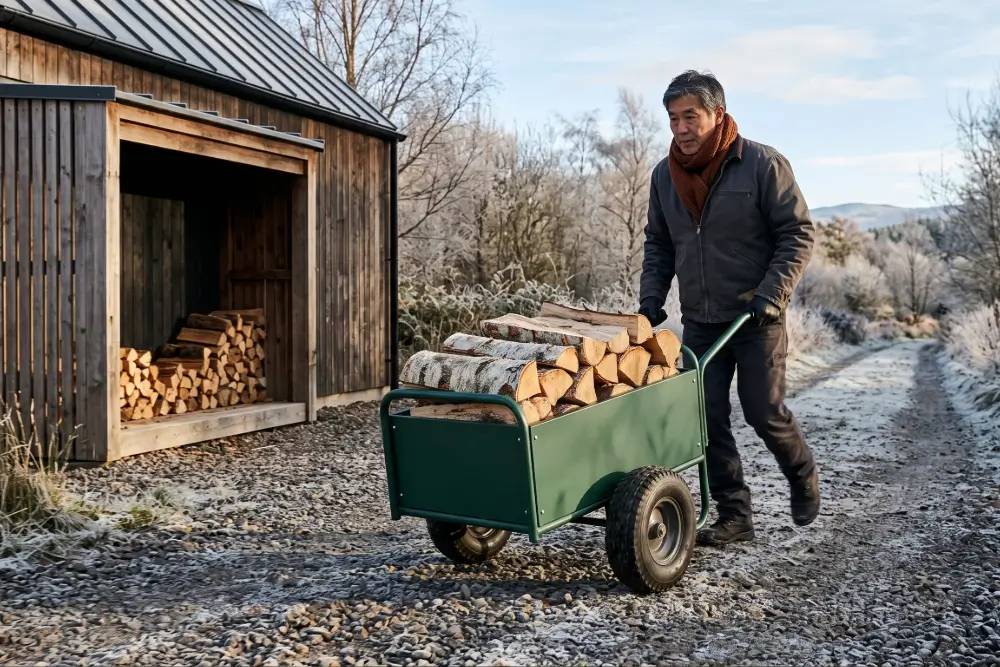
Once you know what’s on the vehicle, the job is still harder than a typical local delivery:
- Weight runs out before space does. A few bulk bags can reach a van’s payload long before its floor is full, so a route planned by stop count alone can overload a vehicle.
- Vehicles aren’t interchangeable. A tipper, a flatbed with a crane and a small van each suit different orders. Pallets need a tail lift; loose loads need somewhere to tip.
- Rural routes are long. Lanes are narrow, some driveways can’t take a heavy truck, and drive time between stops often outweighs time at the stop.
- The drop takes time. Tipping, stacking in a shed or wheeling pallets to the back of a house turns a two-minute drop into a half-hour job, and routes need to allow for it.
- Customers need to be ready. A load that can’t be dropped because a gate is locked is a costly return trip.
The answer is to plan by capacity, not just addresses: set a weight or item limit for each vehicle, group orders by area, give drivers access notes and enough time per stop, and confirm the delivery day early. The guides to cutting fuel costs and breaking down transportation costs show how much each unnecessary kilometre adds, and our big and bulky page covers heavy deliveries more broadly.
“With Bulky items and limited room on the truck we can limit the allowed items per route to not over schedule the routes. Adding orders, custom stops, and re optimizing the routes is no problem, allowing us to have the order cutoff point very close to the delivery date.”

Wood Smoke, Carbon and the Case for Local Logs
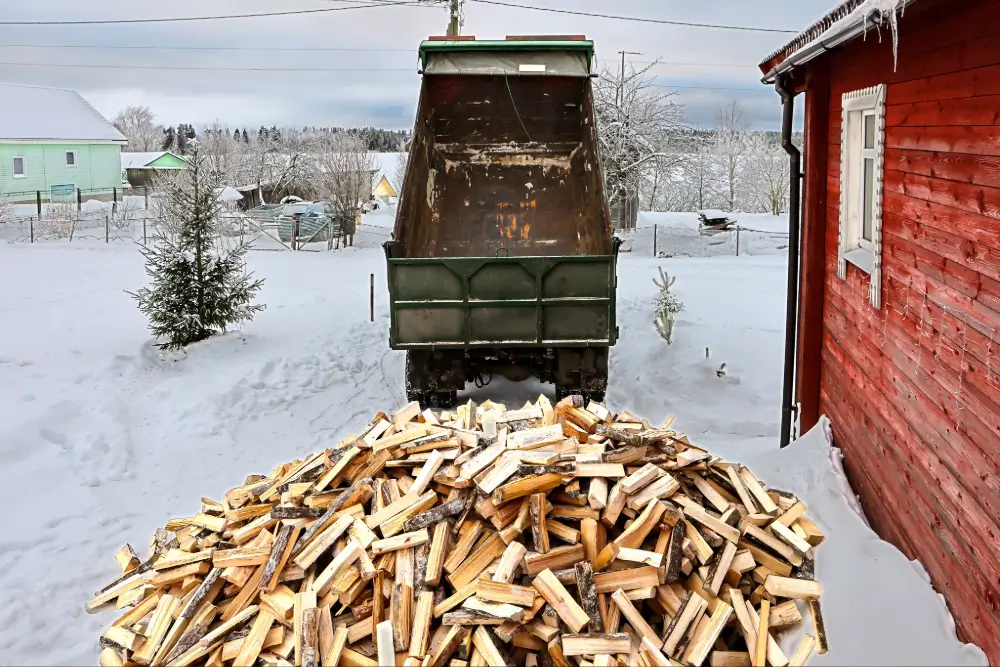
Firewood’s environmental case is real, but it isn’t simple.
On one side, wood is a renewable fuel. The Forestry Commission notes that firewood’s popularity has grown with the push for renewable heating, and that selling it gives landowners a market for lower-quality timber. The same article adds a caveat: higher-quality timber is better used in products that store carbon for longer.
On the other side is air quality. UK government statistics show that in 2024, domestic combustion produced 20% of the UK’s PM2.5 emissions, with households burning wood indoors contributing 12%. The same figures show improvement: emissions from domestic combustion fell 7% from 2023 to 2024 and 26% between 2018 and 2024, a period that also saw England move to certified dry fuel.
For a firewood seller, the practical response is the same either way:
- Sell dry wood. It burns cleaner and meets the rules.
- Keep it local. Short supply chains cut transport emissions, and in North America, local wood delivery is what the pest rules encourage.
- Deliver efficiently. Fewer kilometres per load means lower emissions and lower costs. Electric delivery vehicles are becoming an option for lighter loads, and sustainable delivery practices apply to heavy routes too.
Planning Firewood Routes with EasyRoutes
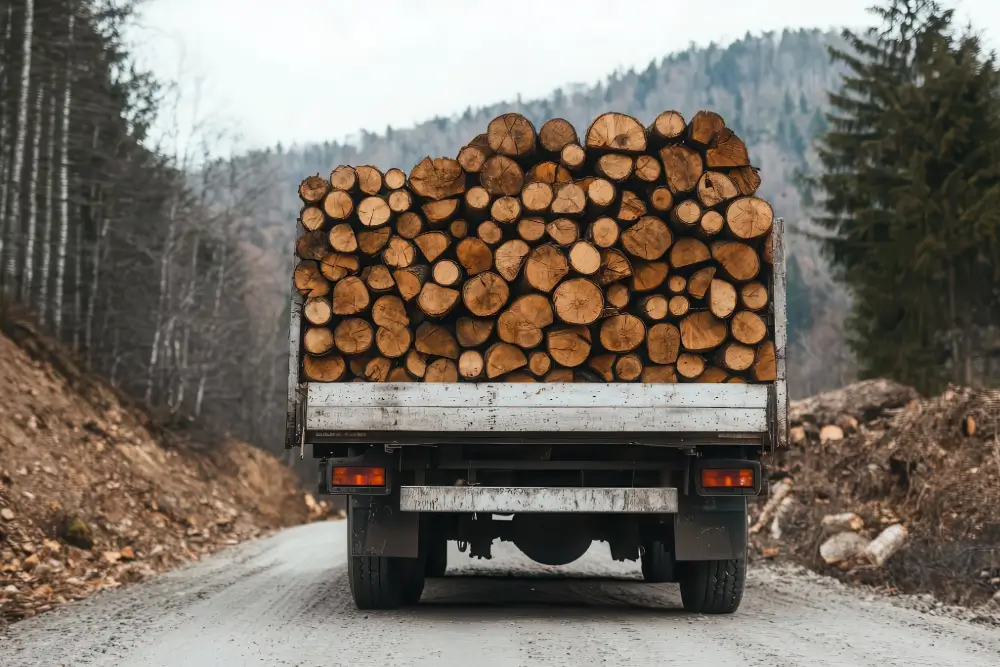
EasyRoutes is a route planning and delivery management tool built for Shopify and other leading eCommerce platforms, used by firewood and log sellers from single vans to multi-truck fleets. Its route optimization engine turns a day’s orders into efficient routes in a few clicks, with options like avoiding tolls and time per stop.
For the problems that are specific to firewood:
- Heavy loads: set a maximum weight or item count per route to match each vehicle, and EasyRoutes starts a new route rather than overloading one. Vehicle profiles store each vehicle’s details for tracking.
- Loading the truck: every route gets an inventory of what to load, and packing slips print per route, so drivers stop working from a pile of paper.
- Rural territories: Delivery Zones keep each route inside its area, and route balancing spreads stops evenly across drivers on busy days.
- Winter surges: driver seats you can add and remove as needed let you bring on extra drivers for the first cold snap and scale back in spring.
- Customer readiness: automated notifications and tracking tell customers their delivery day and ETA, and proof of delivery photos show exactly where the bag was left.
- Your delivery days: delivery dates chosen at checkout through supported apps like Zapiet flow into planning, or you can filter orders by your own tags and delivery rules.
Galway’s EcoFuel shows the difference. The Irish renewable fuel brand delivers kiln-dried firewood and briquettes on pallets, with a trolley service to move them the last stretch to the customer’s door. Before EasyRoutes, its team spent about 20 hours a week planning routes, building packing lists for each truck and handling last-minute changes. Now route planning takes about an hour each morning, with almost no paper.
Before the First Frost
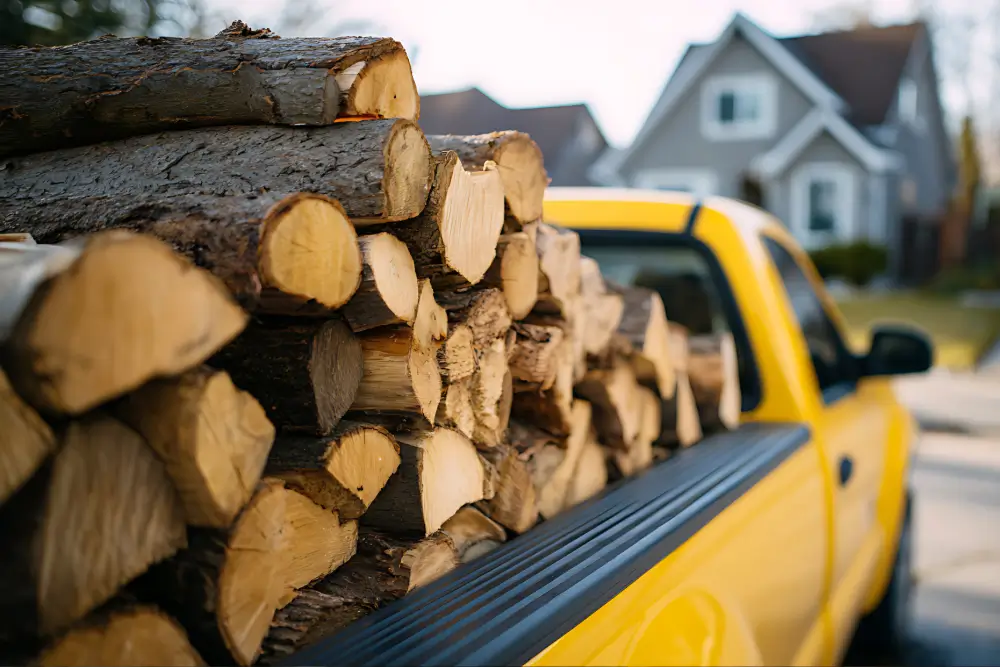
Firewood in 2026 is a steady, local business with a very uneven calendar. Customers across the UK, Ireland and Canada buy their wood in and expect it dry, on the agreed day and dropped exactly where they want it. The sellers who do best use the months before winter to certify dry stock, open early ordering, set vehicle limits and line up extra drivers. Ready to plan your heaviest season in minutes instead of hours? Install EasyRoutes before the first cold snap and try every feature free for 14 days.